For parents, few decisions feel as weighty as determining the precise moment to transition your child from a five-point harness to a booster seat. This pivotal shift is not merely about convenience; it’s a fundamental change in how your growing child is protected during every car ride. Getting it right is a delicate balance between harnessing the superior safety of a five-point system and granting the independence of a seat belt, all while ensuring maximum security tailored to your child’s unique development.
Navigating this transition is fraught with potential missteps that can inadvertently compromise safety. The most common error is moving a child out of a harness too early, driven by excitement or a desire for more space, before they meet the critical minimum weight and height requirements. Even when a child is physically large enough, parents often overlook whether the child possesses the maturity to sit properly for the entire journey without slouching or unbuckling, a necessity for a seat belt to function correctly. Furthermore, an incorrectly adjusted harness—whether the straps are too high or too low—can fail to provide optimal protection in a harness-to-booster seat, creating dangerous gaps in safety.
This guide cuts through the confusion by outlining the clear, performance-based indicators that signal your child is truly ready for a harness booster seat. We move beyond age to focus on concrete criteria: strict adherence to manufacturer weight and height limits, demonstrated maturity for proper seating posture, and the long-term value of a seat that adapts securely through multiple stages. Our aim is to provide a reliable roadmap for this essential safety milestone, ensuring your child remains protected at every step of their journey.

Graco Tranzitions 3-in-1: Extended-Use Versatility
Brand: Graco | Model: Tranzitions 3-in-1
Best for: A single, long-term seat from toddler to big kid
Rating:
★★★★☆
4.2/5
Who It’s For: This seat is ideal for parents seeking a cost-effective, one-and-done solution to navigate the entire transition from harness to booster. It’s a practical choice for families who prioritize simplicity and want to avoid buying multiple seats as their child grows.
Performance & Real-World Application: The Tranzitions performs its core duty of adapting to a child’s growth with straightforward mechanics. It functions as a forward-facing harness seat (22-65 lbs), a high-back belt-positioning booster (40-100 lbs), and finally a backless booster (40-100 lbs). The harness adjustment is a standard front-pull system, and the transition to booster mode involves removing the harness and threading the vehicle seatbelt through designated guides. Its performance is reliable and intuitive, though it lacks some of the premium features found in more expensive, dedicated seats.
Key Specifications:
- Modes: Forward-Facing Harness, High-Back Booster, Backless Booster
- Weight Capacity (Harness): 22 – 65 lbs
- Weight Capacity (Booster): 40 – 100 lbs
- Height Limit (Harness): Up to 49″
Pros:
- Exceptional long-term value, covering 4+ years of use in one purchase
- Simple, no-rethread harness height adjustment for easy growth accommodation
- 6-position recline in harness mode improves child comfort in various vehicle seats
Cons:
- Can be bulky and wide, potentially limiting seating configurations in smaller vehicles
- As a 3-in-1, it may not excel in any single mode as well as a dedicated harness or booster seat

Evenflo Maestro Sport: Budget-Friendly All-in-One
Brand: Evenflo | Model: Maestro Sport
Best for: Cost-conscious families needing a long-term harness-to-booster solution
Rating:
★★★★☆
4.2/5
Who It’s For: This seat is ideal for parents seeking a straightforward, economical transition seat that will carry a child from toddlerhood to the booster stage. It’s a practical choice for families with multiple vehicles or as a dedicated seat for carpools, where premium features are less critical than core functionality and value.
Performance & Real-World Application: The Maestro Sport performs reliably as a dedicated harnessed seat and a basic backless booster. Its primary function is to provide safe, extended harnessing up to 65 lbs, with a focus on simplicity. The harness adjustment is manual and the recline is fixed, which streamlines installation but offers less fine-tuning than premium models. In booster mode, it converts to a no-frills, lightweight backless booster, completing its duty cycle effectively.
Key Specifications:
- Harness Weight Limit: 22 – 65 lbs
- Booster Mode Weight: 40 – 110 lbs
- Harness Height Positions: 10-position SureSafe Adjuster
- Installation: LATCH or Seat Belt
Pros:
- Exceptional value for a combination seat with a 65 lb harness limit.
- Simple, no-fuss conversion from harness to backless booster.
- Machine-washable seat pad simplifies cleanup after spills.
Cons:
- Does not convert to a high-back booster, limiting long-term use and side-impact protection in later stages.
- Fixed recline and basic padding may be less comfortable for long trips compared to more adjustable seats.
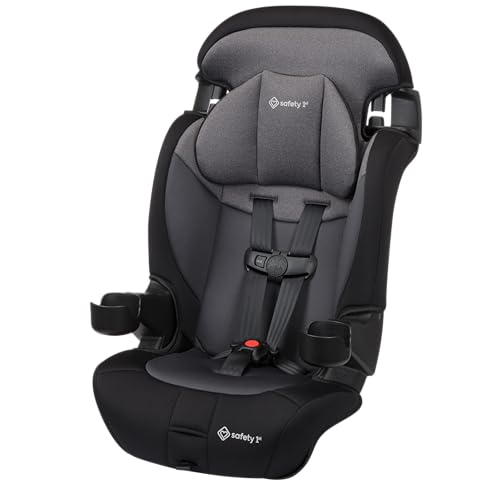
Safety 1st Grand: Extended Harness-to-Booster
Brand: Safety 1st | Model: Grand 2-in-1
Best for: Maximizing the harness mode for larger toddlers
Rating:
★★★★☆
4.2/5
Who It’s For: This seat is ideal for parents whose children outgrow the height and weight limits of infant seats or smaller convertibles quickly but who want to delay the transition to a booster. It specifically targets families needing a long-lasting, dedicated harnessed seat before converting to a belt-positioning booster.
Performance & Real-World Application: The Grand excels in its primary function as a forward-facing harnessed seat. Its standout feature is an exceptionally high harness weight limit, allowing it to safely accommodate children up to 65 lbs in the 5-point harness mode. In practice, this means a child can remain in the safer, more secure harness system for years longer than with most combination seats. The transition to booster mode is straightforward, involving harness removal and adjustment of the vehicle seat belt guide.
Key Specifications:
- Harness Weight Limit: 22 – 65 lbs
- Booster Weight Limit: 40 – 100 lbs
- Harness Height Limit: 19 inches (top harness slot)
- Installation: Forward-facing only with LATCH or seat belt
Pros:
- One of the highest harness weight capacities (65 lbs) in its category
- No-rethread harness system allows easy height adjustment without disassembly
- Generous padding and multiple recline positions enhance child comfort on longer trips
Cons:
- Cannot be used rear-facing, limiting its versatility from birth
- Seat is quite large and heavy, which can be challenging for vehicle-to-vehicle transfers
Buyer’s Guide: How to Choose
When choosing a harness-to-booster car seat, the right fit for your child, vehicle, and budget is key. Focus on the seat’s size and weight specifications, how long it can be used in harness mode, the quality of its construction for long-term reliability, and the overall price-value relationship to get the most from your investment.
1. Harness Weight Limit & Longevity
The highest harness weight limit determines how long you can keep your child in the safer, five-point harness before switching to booster mode. For example, a seat with a 65-pound harness limit will keep an average child harnessed 2-3 years longer than a model with a 50-pound limit, delaying the transition to a belt-positioning booster.
2. Size & Vehicle Fit
These seats are large, so a critical trade-off is interior space versus child comfort. A bulkier, more padded seat may be more comfortable for long trips but can make it difficult to fit three seats in a row. This factor matters most if you have a smaller car or need to accommodate multiple car seats.
3. Build Quality & Ease of Use
A well-constructed seat with intuitive harness adjustments and clear belt routing will be used correctly every time, which is fundamental for safety. It also withstands years of daily use with minimal wear, protecting your investment and avoiding the need for a premature replacement.
Frequently Asked Questions
Q1: When should I switch my child from the harness to the booster mode?
A1: Only switch when your child exceeds the seat’s maximum height or weight limit for harness use. They must also be mature enough to sit properly with the seat belt for the entire ride.
Q2: Can I use this type of seat on an airplane?
A2: Most harness-to-booster seats are FAA-approved for air travel when used in harness mode. Check your specific model’s manual and use it only in a purchased airplane seat.
Q3: How do I know if the seat fits correctly in my car?
A3: Always try the seat in your vehicle before buying. Check for a secure install with less than 1 inch of movement at the belt path and ensure it doesn’t over-recline or interfere with the front seats.
Q4: Are these seats easy to clean?
A4: Look for models with machine-washable seat pad covers. Seats with fewer crevices and smooth surfaces are generally easier to wipe down after spills and crumbs.
Q5: How long can I typically use a harness-to-booster seat?
A5: Most models accommodate children from about 20-25 pounds up to 100-120 pounds as a booster, often providing 7-10 years of total use depending on your child’s growth rate.
Final Recommendation
Based on our review, here are the top recommendations from the Graco Tranzitions 3-in-1; Evenflo Maestro Sport; Safety 1st Grand.
Best Overall: Graco Tranzitions 3-in-1. It offers the longest usable life with a high 65-pound harness limit and transitions through three distinct modes (harness, high-back booster, backless booster). The build quality is robust, and it includes convenient features like a one-hand, 10-position headrest adjustment that simplifies getting a perfect fit as your child grows.
Best Value: Evenflo Maestro Sport. This seat provides a solid, no-frills path from harness to high-back booster at a very accessible price point. It meets all critical safety standards and offers a 50-pound harness limit, making it a cost-effective choice for parents seeking a reliable, dedicated harness-to-booster seat without paying for extra modes or features they may not need.