As a new parent, few decisions feel as weighty as installing your infant’s car seat, a task where the right choice is a silent guardian and the wrong one an unthinkable risk. The quest for the absolute safest spot in your vehicle, whether a commanding SUV or a low-slung sedan, is more than logistical—it’s an emotional imperative for peace of mind on every journey. This guide cuts through the noise to deliver the definitive, expert-backed placement that forms the cornerstone of your child’s travel security.
Despite best intentions, common installation errors can inadvertently compromise safety. The most dangerous is placing the rear-facing seat in the front passenger seat, where a deploying airbag can cause catastrophic injury. Other pitfalls include using the center seating position without confirming a perfectly flat and secure fit against the vehicle seat, or defaulting to an outboard window seat, which may be more vulnerable in a direct side-impact collision. These mistakes often stem from confusion over vehicle-specific layouts and a misunderstanding of how crash forces interact with different seating positions.
The solution lies in a clear, evidence-based hierarchy. For nearly all vehicles, the rear center seat is universally recommended as the safest position, as it provides the maximum buffer from any point of impact. This guide’s analysis, rooted in crash data and engineering principles, explains why this position offers superior protection in both SUVs and sedans, while also providing actionable steps to verify a proper, standards-compliant installation there. We translate complex safety science into clear guidance, ensuring your child has the strongest possible defense on the road.

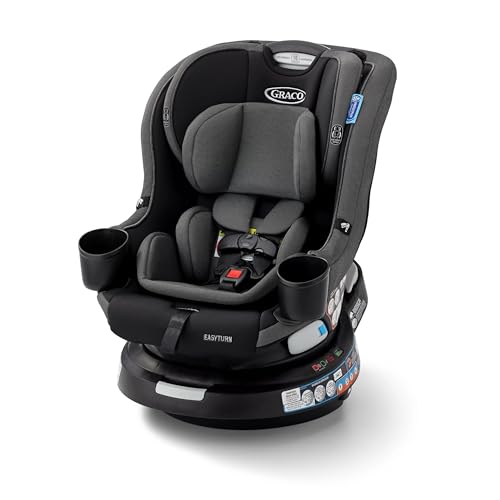
Graco Extend2Fit Convertible: Extended Rear-Facing Safety
Brand: Graco | Model: Extend2Fit Convertible
Best for: Maximizing rear-facing safety duration in any vehicle
Rating:
★★★★☆
4.6/5
Who It’s For: Parents and caregivers whose primary goal is to keep their child rear-facing for as long as possible, up to 50 pounds. It’s ideal for those who need a versatile, long-term seat that fits well in both compact sedans and larger SUVs without sacrificing legroom for the growing child.
Performance & Real-World Application: This seat excels in its core safety mission by featuring a unique 4-position extension panel that provides up to 5″ of additional legroom for the child. This engineering directly supports extended rear-facing use, which is proven to be significantly safer. In practice, the installation is straightforward using the LATCH system or seat belt, and the InRight LATCH connectors provide a secure, audible click for confidence. The steel-reinforced frame and side-impact tested design deliver robust protection in the context of a vehicle cabin.
Key Specifications:
- Rear-Facing Weight Limit: 4 – 50 lbs
- Forward-Facing Weight Limit: 22 – 65 lbs
- Height Limit (Rear-Facing): Up to 49″
- Key Safety Feature: 4-Position Extend2Fit Panel
Pros:
- Industry-leading 50 lb rear-facing limit promotes optimal safety practices.
- Extension panel cleverly solves the legroom problem for taller toddlers, preventing premature transition.
- Compact seat back design improves front-seat clearance, making it viable for smaller vehicles.
Cons:
- The harness adjustment knob can be stiff and difficult to turn smoothly, especially when the child is seated.
- Upholstery materials, while easy to clean, are not as plush or breathable as some premium competitors.

Graco Extend2Fit 3-in-1: Extended Rear-Facing Safety
Brand: Graco | Model: Extend2Fit 3-in-1
Best for: Maximizing rear-facing safety in compact vehicles
Rating:
★★★★★
4.8/5
Who It’s For: This seat is ideal for safety-conscious parents who drive smaller sedans or SUVs and want to adhere to the AAP’s rear-facing recommendation for as long as possible. It solves the common space issue where a child’s legs reach the vehicle seatback before they meet the height/weight limit for forward-facing.
Performance & Real-World Application: The Extend2Fit excels in its core safety function by featuring a unique 4-position extension panel that provides up to 5″ of additional legroom for a growing child. This engineering allows a child to remain rear-facing up to 50 lbs, significantly longer than most convertible seats. Its TrueShield side-impact protection and steel-reinforced frame provide robust crash safety, while its InRight LATCH system offers a secure, one-second attachment that audibly confirms a correct installation.
Key Specifications:
- Rear-Facing Weight Limit: 4 – 50 lbs
- Forward-Facing Weight Limit: 22 – 65 lbs (with harness)
- Booster Mode Weight Limit: 40 – 100 lbs
- Seat Dimensions (Rear-Facing): 24.5″ W x 27.25″ H x 28.5″ D (compact footprint)
Pros:
- Industry-leading 50 lb rear-facing limit maximizes safety in frontal collisions.
- Space-saving design fits well in most sedans and mid-size SUVs.
- Simple, no-rethread harness adjustment grows with the child.
Cons:
- The extension panel, while functional, can make the seat feel bulky when deployed.
- Harness straps may twist more easily than on some premium competitors.

Graco TriRide 3-in-1: Long-Term Convertible Seat
Brand: Graco | Model: TriRide 3-in-1
Best for: Families seeking a single seat from infancy to booster
Rating:
★★★★☆
4.3/5
Who It’s For: This seat is ideal for parents who prioritize a long-term, cost-effective solution and want to avoid buying multiple seats as their child grows. It’s particularly well-suited for families with mid-size to larger SUVs or sedans who need a versatile, rear-facing to forward-facing to booster seat.
Performance & Real-World Application: The TriRide excels as a dedicated safety capsule, providing robust side-impact protection and a secure fit in both rear- and forward-facing modes. Its performance is defined by its straightforward, no-frills installation using the vehicle seat belt or LATCH system, and its 3-in-1 design ensures a consistent, snug harness fit through multiple growth stages, though booster mode is more basic.
Key Specifications:
- Rear-Facing Weight: 5-40 lbs
- Forward-Facing Weight: 22-65 lbs (with 5-point harness)
- Booster Mode Weight: 40-100 lbs
- Installation Methods: Seat Belt & LATCH
Pros:
- Exceptional long-term value, covering a child from infant to school age in one seat.
- Simplified installation process with clear belt paths and level indicators.
- Compact front-to-back footprint in rear-facing mode, preserving front passenger space.
Cons:
- The harness adjustment knob can be stiff and difficult to tighten smoothly with one hand.
- Booster mode lacks the side-wing depth and LATCH attachment found in dedicated high-back boosters.
Buyer’s Guide: How to Choose
When finding the safest place for an infant car seat in an SUV or sedan, the car seat itself must be the right fit for your vehicle, your child, and your budget. Key criteria include how well it installs securely in your specific car, its size and formulation for extended rear-facing safety, its specifications for long-term use, and its overall reliability and price-value relationship.
1. Secure Installation & Vehicle Fit
The safest installation is one that is rock-solid with no wiggle room. This depends heavily on how the car seat’s design interacts with your vehicle’s seat contours and LATCH anchors. For example, a seat with a no-rethread harness and clear belt path indicators makes achieving a tight, correct install much easier in both an SUV’s higher seats or a sedan’s lower ones, reducing the risk of user error.
2. Extended Rear-Facing Capability
Keeping your child rear-facing as long as possible, ideally to age 4, is the single most important safety factor. This matters most for parents wanting to maximize protection without buying multiple seats. The key trade-off is often the seat’s physical size when rear-facing, which can impact front passenger legroom, especially in sedans.
3. Long-Term Usability & Cost of Ownership
A seat that adapts through multiple stages (convertible, all-in-one) impacts your total cost by potentially eliminating the need for a booster seat later. Consider the durability of the harness and fabric over years of use, the ease of cleaning, and whether the seat’s height and weight limits will accommodate your child’s growth, ensuring you get the full safety and financial value from your investment.
Frequently Asked Questions
Q1: Which car seat position is the absolute safest?
A1: The center of the back seat is statistically safest, as it is furthest from any point of impact. However, the safest position is ultimately where you can achieve a perfectly tight installation every time, which may be an outboard position depending on your vehicle.
Q2: How do I know if a convertible seat will fit rear-facing in my small car?
A2: Check the manufacturer’s listed seat dimensions and compare them to the space between your vehicle’s back seat and the front seats when they are in a comfortable driving position. Many brands also offer vehicle fit guides on their websites.
Q3: What’s the difference between a convertible and a 3-in-1 seat?
A3: A convertible seat transitions from rear-facing to forward-facing with a harness. A 3-in-1 seat does that and then converts into a belt-positioning booster, potentially offering use from infancy through the booster stage.
Q4: Is the LATCH system safer than using the seat belt to install?
A4: No, both the LATCH system and the vehicle seat belt are equally safe when used correctly for installation. The goal is a secure installation with less than one inch of movement at the belt path, which can be achieved with either method.
Q5: How long can I safely use a car seat?
A5: All car seats have an expiration date, typically 6-10 years from manufacture, found on a label on the seat. Materials degrade over time, so it is critical to follow this date and discontinue use afterward.
Final Recommendation
Based on our review, here are the top recommendations from the Graco Extend2Fit Convertible; Graco Extend2Fit 3-in-1; Graco TriRide 3-in-1.
Best Overall: Graco Extend2Fit 3-in-1. This seat combines the exceptional extended rear-facing capability of the Extend2Fit line, with a 50-pound rear-facing limit, with the long-term value of a 3-in-1 design that functions as a booster. It offers the most complete safety and usability package, growing with your child from infant to big kid without requiring another seat purchase.
Best Value: Graco Extend2Fit Convertible. It provides the same crucial extended rear-facing safety feature—the 50-pound rear-facing limit with an adjustable extension panel—as the 3-in-1 model, but at a typically lower price point. You invest in the most critical safety phase (rear-facing) and still get years of forward-facing harness use, making it an outstanding core safety purchase.