As a parent, few decisions feel as weighty as those involving your child’s safety, especially on the road. The transition from a rear-facing to a forward-facing car seat marks a significant milestone, but moving too soon can inadvertently compromise their protection. It’s a shift surrounded by a mix of excitement, uncertainty, and a paramount need to get it right, making informed guidance not just helpful, but essential.
Navigating this change is often fraught with confusion and common pitfalls. Many parents feel pressured to turn their child forward-facing prematurely, relying solely on a minimum age while overlooking the critical height and weight requirements set by safety organizations. Others encounter frustrations with the proper installation of the new seat or achieving a correct harness fit in the unfamiliar orientation. Furthermore, selecting a seat without considering future growth can lead to yet another costly and premature switch, adding to the stress.
This guide cuts through the uncertainty by clarifying the latest safety standards and the developmental milestones—those of size, bone strength, and maturity—that truly dictate the safest time to switch. Beyond the timing, we provide trusted product analysis focused on top safety ratings, straightforward installation, extended longevity, and overall value. Our goal is to equip you with the knowledge and tools for a seamless transition, ensuring your child remains securely protected through every journey ahead.

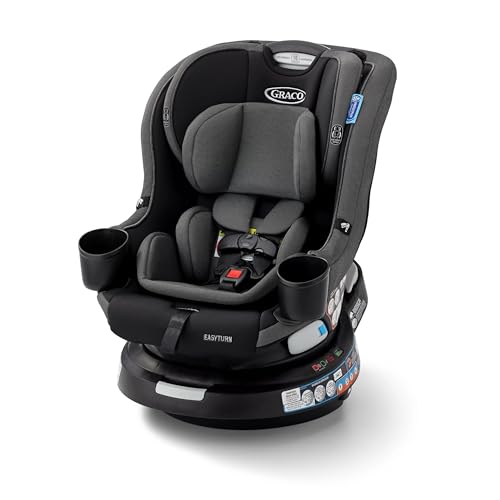
Graco SlimFit 3-in-1: Space-Saving Convertible Seat
Brand: Graco | Model: SlimFit 3-in-1
Best for: Compact cars and tight backseats
Rating:
★★★★☆
4.4/5
Who It’s For: This seat is ideal for parents with smaller vehicles who need a long-term, space-efficient solution. It’s also a strong choice for families needing to fit three car seats across a single row.
Performance & Real-World Application: As a convertible seat, its core performance is delivering extended safety in a compact footprint. The “SlimFit” name is accurate; it installs securely in tight spaces without compromising on essential side-impact protection or comfort. The 3-in-1 functionality provides a seamless transition from rear-facing (5-40 lbs) to forward-facing with harness (22-65 lbs) to a belt-positioning booster (40-100 lbs), offering excellent long-term value.
Key Specifications:
- Use Modes: Rear-Facing, Forward-Facing with Harness, High-Back Booster
- Weight/Height Limits: 5-100 lbs, Up to 57″
- Installation: LATCH or Seat Belt, InRight LATCH System
- Key Feature: 10-position headrest with Simply Safe Adjust Harness
Pros:
- Legitimately slim profile allows for three-across installations in many sedans and SUVs.
- Simple, no-rethread harness adjustment via the headrest makes growing with your child effortless.
- Robust 10-year expiration provides long-term use across multiple children.
Cons:
- The seat cushion and padding are somewhat basic compared to premium models, which may affect long-trip comfort.
- While slim, it can be surprisingly heavy, making it less ideal for frequent vehicle swaps.
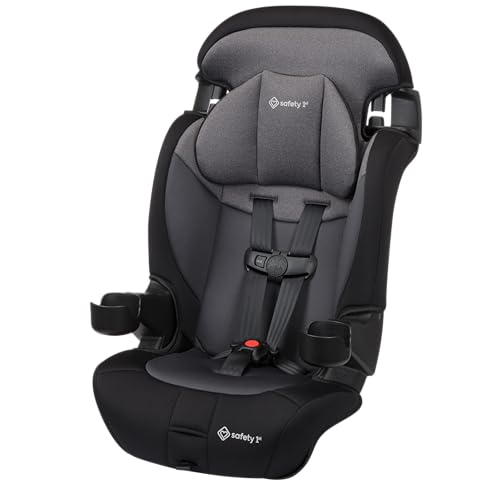
Safety 1st Grand: Extended Rear-Facing Capacity
Brand: Safety 1st | Model: Grand 2-in-1
Best for: Parents prioritizing maximum rear-facing safety
Rating:
★★★★☆
4.2/5
Who It’s For: This seat is ideal for parents who want to adhere to the AAP’s “as long as possible” rear-facing recommendation without needing to buy a second convertible seat. It’s also a strong choice for larger infants and toddlers who outgrow the height/weight limits of other seats early.
Performance & Real-World Application: The Grand’s core performance metric is its exceptional rear-facing weight limit of 50 lbs and height limit of 43 inches, which are among the highest in the market. This engineering allows most children to remain rear-facing well past their second birthday, maximizing safety in the event of a frontal collision. The seat shell is robust, and the installation via LATCH or seat belt is straightforward, providing a secure, non-moving fit when properly installed.
Key Specifications:
- Rear-Facing Limits: 5 – 50 lbs, up to 43″
- Forward-Facing Limits: 22 – 65 lbs, up to 49″
- Harness Positions: 8-position no-rethread harness
- Recline Positions: 4 positions (2 for rear-facing)
Pros:
- Industry-leading 50 lb rear-facing weight limit supports extended use.
- No-rethread harness system adjusts height easily as your child grows.
- Generous padding and multiple recline positions enhance child comfort.
Cons:
- Its large shell and high back can consume significant front-to-back cabin space, making it challenging in smaller vehicles.
- The seat is notably heavy, which can be a drawback when moving it between vehicles.
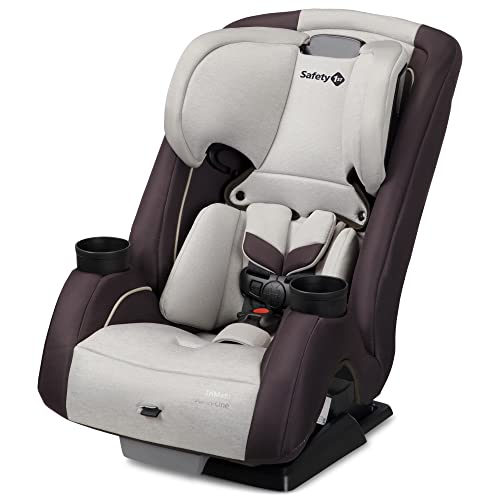
Safety 1st TriMate: 3-in-1 Convertible Seat
Brand: Safety 1st | Model: TriMate
Best for: Extended Rear-Facing to Forward-Facing Transition
Rating:
★★★★☆
4.2/5
Who It’s For: This seat is ideal for parents seeking a single, cost-effective solution to carry a child from infancy through the toddler years, specifically prioritizing an extended rear-facing period. It’s best suited for families with mid-sized vehicles, as its three-mode design offers a long usable lifespan without the need for multiple seat purchases.
Performance & Real-World Application: As a convertible seat, the TriMate’s core performance is defined by its structural integrity and ease of mode transition. In rear-facing mode (5-40 lbs), it provides a secure, reclined shell appropriate for infants and young toddlers. The transition to forward-facing mode (22-40 lbs) is straightforward, with the harness system and recline adjustments performing reliably to secure an active toddler. The built-in lock-offs and straightforward belt pathing aid in achieving a proper vehicle installation, a critical real-world safety factor.
Key Specifications:
- Use Modes: Rear-Facing (5-40 lbs), Forward-Facing with Harness (22-40 lbs), Belt-Positioning Booster (40-100 lbs)
- Harness Slots: 3-position adjustable
- Recline Positions: 3 for rear-facing, 1 for forward-facing
- Shell Construction: Energy-absorbing foam with a steel-reinforced frame
Pros:
- Excellent value, covering three essential stages of car seat use in one unit.
- High rear-facing weight limit (40 lbs) supports extended rear-facing best practices.
- Includes integrated lock-offs to simplify and secure seat belt installations.
Cons:
- The harness adjustment is a rear-pull design, which can be less convenient than a front-adjust strap when the seat is installed.
- As a 3-in-1, it can be bulkier than dedicated infant or combination seats, potentially affecting front passenger space.
Buyer’s Guide: How to Choose
When deciding when to switch your baby to a forward-facing car seat, the right choice depends on matching key criteria to your needs. Focus on the seat’s fit in your vehicle and for your growing child, its safety specifications and certifications, and the overall price-value relationship to ensure reliable protection without overspending.
1. Proper Fit and Size
Before switching to forward-facing, you must ensure the car seat fits both your child and your vehicle. A seat that’s too large can install poorly, compromising safety. For example, a compact seat like the Graco SlimFit 3-in-1 is crucial if you need to fit three seats across the back of a sedan.
2. Harness System and Comfort
The harness design is a key trade-off between ease of adjustment and long-term comfort. A no-rethread harness allows you to adjust the shoulder height without disassembling the seat, which matters most for parents who want a hassle-free experience as their child grows through multiple stages.
3. Longevity and Convertibility
A seat’s ability to convert from forward-facing with a harness to a booster impacts its total cost of ownership. A 3-in-1 design that lasts for many years offers better long-term value and reliability than a seat your child will outgrow quickly, saving you from buying multiple seats.
Frequently Asked Questions
Q1: When is it safe to switch my child to forward-facing?
A1: It is safest to keep your child rear-facing as long as possible, until they reach the maximum height or weight limit allowed by their rear-facing convertible car seat. Always follow your specific car seat’s manual and state laws.
Q2: What is the difference between a convertible and a 3-in-1 car seat?
A2: A convertible seat switches from rear-facing to forward-facing with a 5-point harness. A 3-in-1 seat does that and also converts into a belt-positioning booster for older children, often offering longer use.
Q3: How do I know if the car seat is installed correctly?
A3: The seat should not move more than one inch side-to-side or forward at the belt path. Always use the top tether for forward-facing installation and consult a certified Child Passenger Safety Technician for a check.
Q4: Are more expensive car seats safer?
A4: Not necessarily. All car seats sold must pass the same federal safety standards. A higher price often pays for convenience features, extra padding, or a longer lifespan, not a higher level of safety certification.
Q5: Can I use a second-hand car seat?
A5: It is not recommended unless you know the seat’s full history. You must be certain it has never been in a crash, is not expired, and has all its original parts and labels with no recalls.
Final Recommendation
Based on our review, here are the top recommendations from the Graco SlimFit 3-in-1; Safety 1st Grand; Safety 1st TriMate.
Best Overall: Graco SlimFit 3-in-1. It excels with its space-saving design, no-rethread harness for easy adjustments, and true 3-in-1 longevity that grows with your child from rear-facing to a booster. This combination of convenience, a secure fit in most vehicles, and extended use provides top-tier versatility and safety.
Best Value: Safety 1st TriMate. This seat delivers essential forward-facing safety and comfort at a very accessible price point. It provides a reliable 5-point harness system and converts to a booster, offering solid multi-stage functionality without the premium cost, making it an excellent choice for budget-conscious families.